Thinking about buying an Everett home with a lower level, attic, or flexible floor plan and hoping it could help offset your mortgage? You are not alone. In a city where housing costs are a real pressure point, the right multi-level home can create useful rental income, but only if the space can function as a legal dwelling unit, not just a finished room. This guide will help you understand what to look for, what questions to ask, and how to size up the numbers before you buy. Let’s dive in.
Why Everett draws interest
Everett has a mix of homeowners, renters, and housing types that makes rental-potential homes especially relevant. The city’s 2025 housing dashboard lists about 114,700 residents, and Census QuickFacts shows a 50.0% owner-occupied housing rate. That balance matters because it points to steady rental demand alongside a large base of owner-occupied homes.
Housing costs are also a major part of the story. Everett reports that 58% of renters and 33% of mortgaged owners are cost-burdened, and the city’s 2023 rental vacancy rate was 5.6% while homeowner vacancy was just 0.3%. For many buyers, even modest rental income from part of a home can change affordability in a meaningful way.
The city’s baseline numbers show why this idea gets attention. Census QuickFacts lists Everett’s median home value at $532,300, median gross rent at $1,675, and median monthly owner cost with a mortgage at $2,319. That does not mean every home will work as a rental property, but it does show why buyers often explore homes with extra space and separate-entry potential.
What “rental potential” means
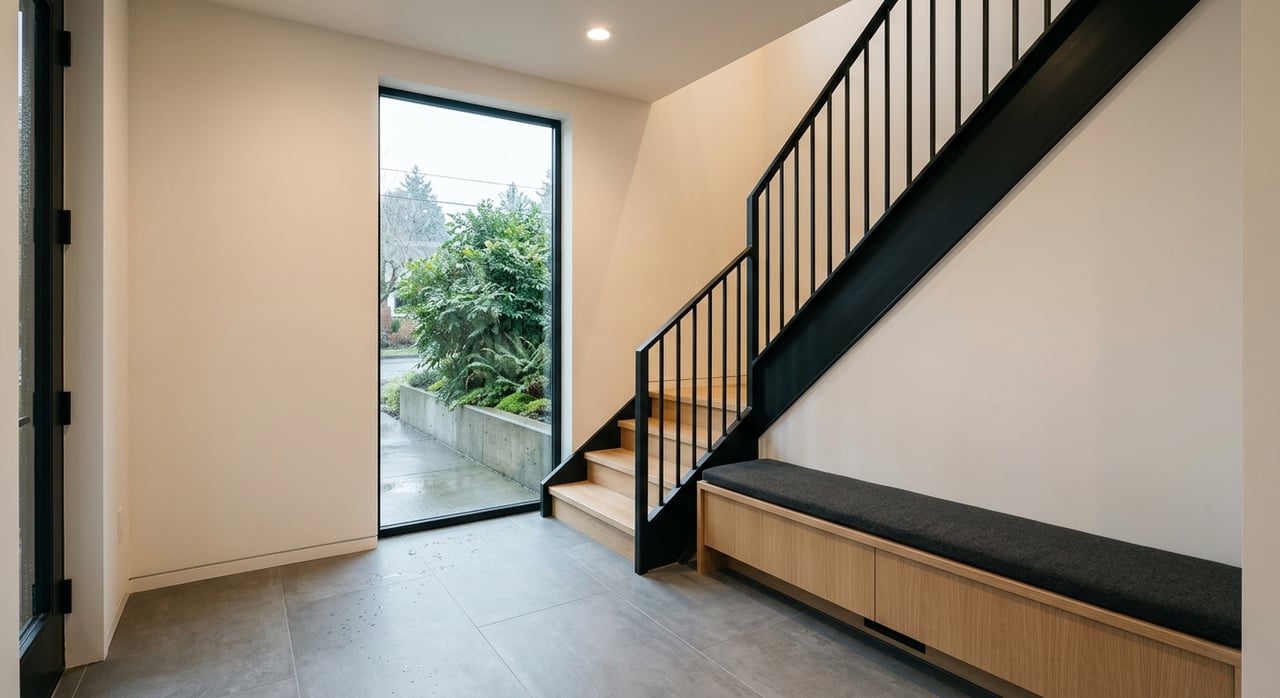
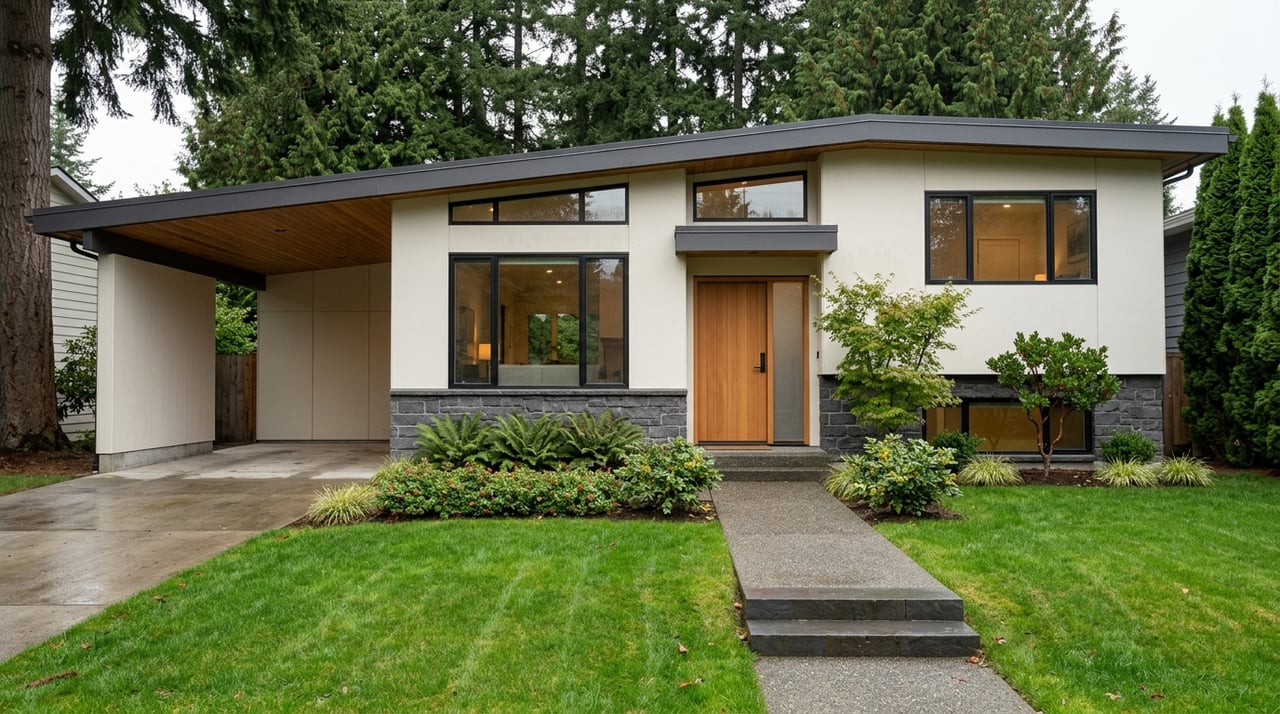
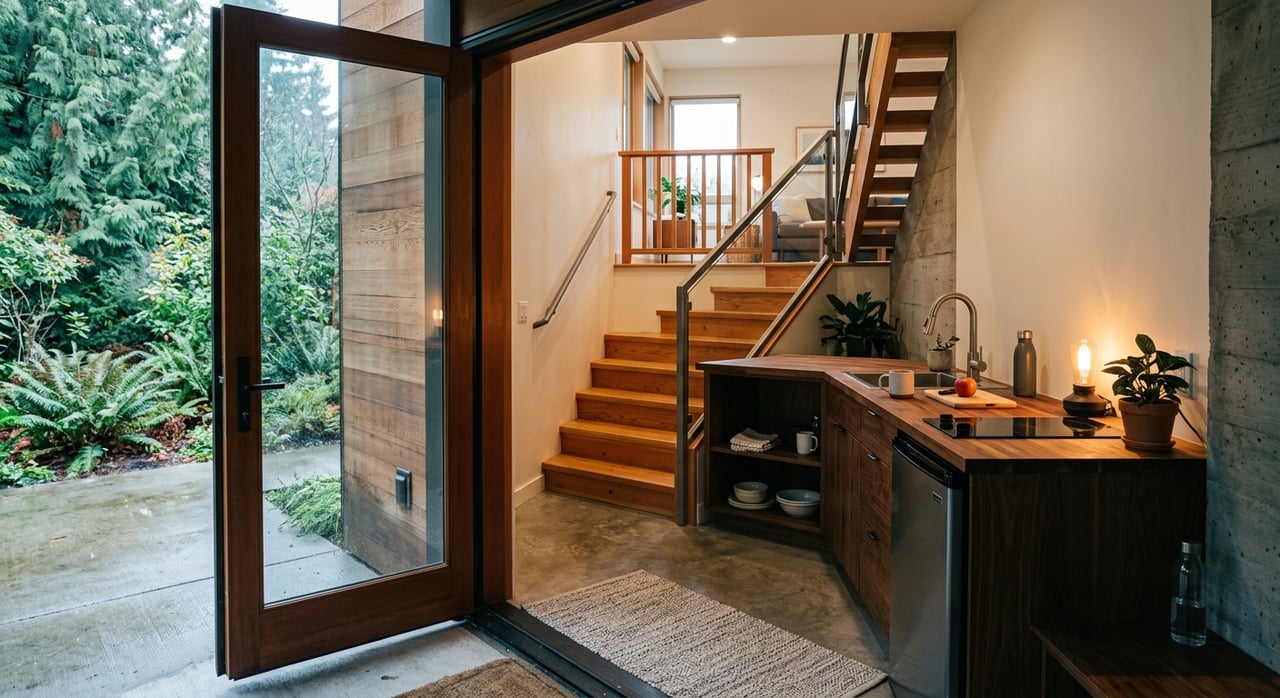
When buyers say a home has rental potential, they often mean one of a few common layouts. In Everett, that can include a split-level home with a lower floor, a house with a finished basement or attic, a townhome with a flexible lower level, or a property that may support an accessory dwelling unit.
Everett’s housing stock supports that idea. In 2023, the city had 47,499 housing units, with 1-unit detached homes making up 44.4% of the total. Two-bedroom and three-bedroom homes also made up about 64.2% of the housing stock, which fits the kinds of layouts many buyers want for either owner-occupancy or a possible second unit.
Still, this is the key distinction: finished space is not the same thing as a legal second unit. A lower level with a bathroom, kitchenette, or separate entrance may feel like a rental setup, but that does not automatically make it lawful to rent as a separate dwelling.
Start with legality, not finishes
This is the first screen every buyer should use. Before you get excited about cabinets, a private entrance, or a lower-level living area, ask whether the space is already recognized as a legal dwelling unit or could realistically become one.
Everett’s current ADU rules matter here. The city’s ADU definition includes interior habitable space such as basements and attics, but not garages or accessory structures, and the unit must be under 1,000 square feet unless it is located within one floor of the principal dwelling. Everett also allows up to two ADUs per principal dwelling unit in most zones, with no minimum lot size.
That creates real opportunity, especially for buyers looking at multi-level homes. But opportunity is not the same as automatic approval. A basement apartment, attic suite, or converted lower level may still need permits, utility work, or a formal change in occupancy before it can be rented legally.
Everett rules to know early
Because Everett updated its comprehensive plan and development regulations in 2025, older online advice can go out of date quickly. For buyers, that means you should treat current city rules and current Washington ADU rules as the source of truth.
Here are some of the most important local points for a starter-level review:
- Everett allows ADUs in all zones except Light Industrial and Heavy Industrial.
- Up to two ADUs may be allowed per principal dwelling unit.
- No minimum lot size is required for ADUs.
- Dwellings under 1,200 square feet require no off-street parking.
- Internal conversions are exempt from some site and building design requirements.
- Each dwelling unit needs its own water meter or service and side sewer.
- Three or more attached dwelling units are reviewed under commercial multifamily standards rather than the 1- or 2-unit residential path.
Washington state rules also support more ADU flexibility in urban growth areas. State rules require cities in these areas to allow at least two ADUs on lots that allow single-family homes in specified configurations, allow certain conversions from existing structures, and bar owner-occupancy requirements. The same rules also allow cities to restrict ADUs from being used as short-term rentals.
Detached buildings need extra caution
A common mistake is assuming a detached bonus space can work as a rental just because it is finished nicely. In Everett, detached accessory buildings are limited to accessory uses and are not allowed to contain bedrooms, dining rooms, or kitchens unless they qualify as a legal dwelling arrangement under city rules.
That means a finished outbuilding is not a shortcut to rental income. If your goal is true rental occupancy, the plan usually needs to meet the standards for a legal dwelling unit or ADU. This is one area where buyers can get burned if they rely on appearance instead of documentation.
Questions to ask before you buy
When you tour an Everett multi-level property, ask focused questions early. Doing this can save you from overpaying for “potential” that may not be practical.
Here are the most important items to verify:
- Is the lower level, attic, or conversion space already a legal dwelling unit?
- Was the work permitted, or is it simply finished space?
- Would creating a second unit trigger a change-of-occupancy permit?
- Does the parcel have the layout and utility capacity for separate water service and side sewer work?
- Does the zoning district, historic overlay, or site condition trigger extra review?
- Will the scope of work likely require a Washington-licensed architect?
- Is your plan for long-term rental use or short-term rental use?
That last question matters because short-term rentals follow separate rules and parking expectations. If your strategy is long-term rental income, make sure you are evaluating the property through that lens instead.
Rent benchmarks to use
It is easy to overestimate rent when a lower level looks stylish or newly updated. A better approach is to start with Everett’s local rent data, then test higher assumptions carefully.
For 2023, Everett’s reported median gross rents were:
- $1,478 for 1-bedroom units
- $1,715 for 2-bedroom units
- $1,969 for 3-bedroom units
The city’s overall median gross rent reached $1,675 in 2023, up 70.7% from $981 in 2015. That growth shows real demand, but it still makes sense to underwrite conservatively.
There is also a broader benchmark from the FY2026 Seattle-Bellevue HMFA schedule, which applies to Snohomish County. That schedule lists $2,501 for a 2-bedroom unit and $3,272 for a 3-bedroom unit. These are benchmark figures, not a promise of what a specific Everett property will achieve, so local property condition, layout, and legality still matter most.
A simple way to run the numbers
You do not need a giant spreadsheet to do a first-pass analysis. You just need a disciplined way to test whether the home’s extra space could help your monthly budget.
Use this basic formula:
Gross scheduled rent - vacancy - repairs and capital expenditures - utilities - insurance - property taxes - management - HOA - mortgage or debt service = cash flow
For a beginner-friendly estimate, start with Everett’s local median rent figures instead of assuming top-of-market pricing. If a home only works at an aggressive rent number, that is a sign to slow down. The safer deals usually still make sense when you use realistic local assumptions.
Why fees and design rules matter
One reason Everett stands out is that the city reduces some development costs for ADUs. Park impact fees are reduced by 50% for one or two ADUs, transportation impact fees are waived for the first ADU and reduced by 50% for the second, school impact fees are waived, and frontage improvements are not required when adding one or two ADUs while keeping the main home in place.
For buyers looking at a home they may improve over time, those cost reductions can make a project more feasible. They do not erase construction costs, permit costs, or utility work, but they can improve the math compared with other markets.
Everett also says internal conversions are exempt from some site and building design requirements. That can make a basement or attic conversion more straightforward than a larger exterior addition, depending on the property and scope.
What makes a strong candidate
The best Everett multi-level homes with rental potential tend to check several boxes at once. You are usually looking for a property that has a practical layout, room for privacy, and a path to legal compliance.
A strong candidate often has:
- A separate or semi-private entrance
- A lower level or upper level with clear separation from the main living area
- Space for a functional kitchen and bath layout, if allowed
- Room to address utility and side sewer requirements
- A zoning and lot setup that supports ADU or conversion feasibility
- A purchase price that still works with conservative rent assumptions
Buyers often focus first on cosmetic upgrades, but layout and legality usually matter more than finishes. A simple lower level with the right structure can be more valuable than a beautiful remodel that lacks a legal path.
Common mistakes to avoid
The biggest mistake is paying for “rental potential” without confirming what is actually allowed. A seller or listing description might mention a second kitchen, separate living area, or guest suite, but those phrases do not confirm legal rental use.
Another common mistake is ignoring utility requirements. In Everett, each dwelling unit needs its own water meter or service and side sewer, and those items can materially affect your budget.
It is also easy to confuse long-term rental strategy with short-term rental strategy. Since Everett has separate short-term rental rules, buyers should not assume one path automatically supports the other.
How a practical broker helps
If you are shopping for Everett homes with built-in upside, you need more than a quick showing. You need someone who can help you look past surface finishes and evaluate whether the property has a realistic path to legal rental use and workable numbers.
That is especially important with multi-level homes, split-level layouts, townhomes, and value-add properties where renovation experience can help you see what is feasible. A practical review can help you compare layout, permitting path, likely costs, and local rent assumptions before you commit.
If you want help finding the right Everett multi-level home, sizing up rental potential, or building a clear acquisition plan around value-add opportunities, work with Davey Wilde.
FAQs
What is a multi-level home with rental potential in Everett?
- A multi-level home with rental potential in Everett is usually a house, townhouse, or similar property with a lower level, attic, or separate living area that may support a legal second unit or ADU, depending on city rules and the property setup.
Can you rent out a finished basement in Everett?
- Not automatically. In Everett, a finished basement does not become a legal rental unit just because it has living space. You need to confirm whether it is already a legal dwelling unit or could be permitted as one.
How many ADUs can a home have in Everett?
- Everett allows up to two ADUs per principal dwelling unit in most zones, with no minimum lot size, according to the city’s current ADU rules.
Do ADUs in Everett need parking?
- Everett says dwellings under 1,200 square feet require no off-street parking, which can make some smaller ADU plans more feasible.
What rent should you assume for an Everett lower-level unit?
- A conservative starting point is Everett’s 2023 median gross rents, which were $1,478 for 1-bedroom units, $1,715 for 2-bedroom units, and $1,969 for 3-bedroom units.
Are detached backyard buildings legal rentals in Everett?
- Not by default. Everett’s code limits detached accessory buildings to accessory uses and does not allow bedrooms, dining rooms, or kitchens in that structure unless it qualifies under the city’s dwelling rules.
What should buyers verify before purchasing an Everett home for rental income?
- Buyers should verify legality of the unit, permit history, zoning, change-of-occupancy needs, separate utility and side sewer requirements, and whether the property’s layout supports long-term rental use.